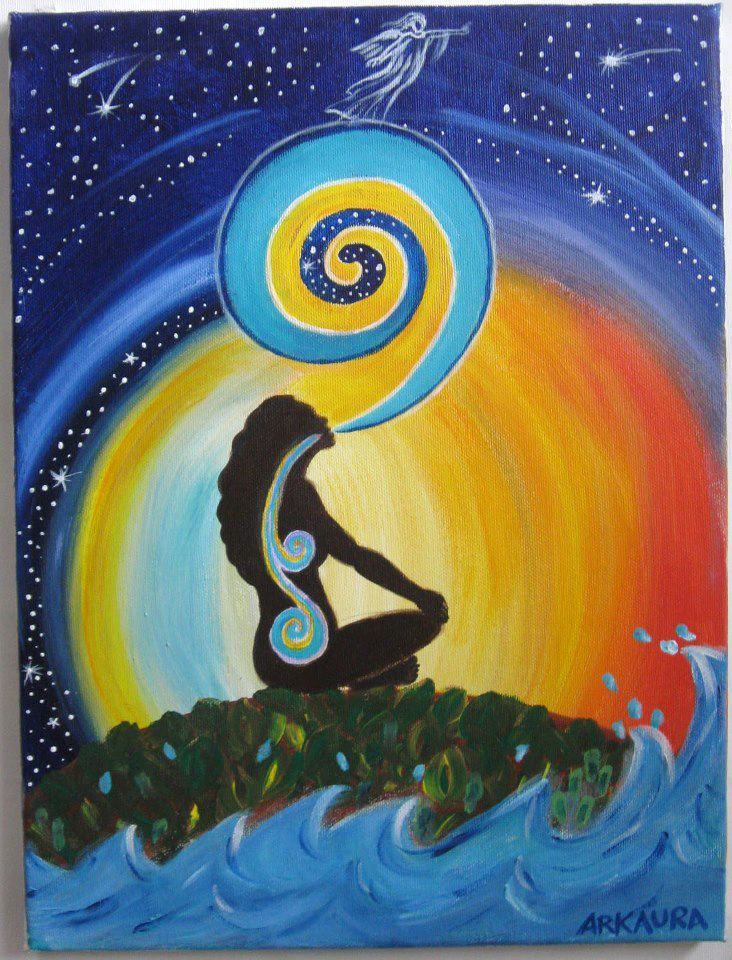
When Breath Becomes Practice
You have been breathing since the moment you entered this world. No lessons, no instructions, no yoga mat required. The breath simply arrived and has been travelling with you ever since.
Most of the time, we hardly notice it. Then we come to yoga, become quiet for a moment, and somebody says, “Notice your breath.”
Suddenly, something we have done thousands of times becomes interesting.
Is my breath deep or shallow? Smooth or hurried? Where do I feel it? What happens when I slow down enough to actually listen?
This is where pranayama begins.
What Is Pranayama?
Pranayama is one of the eight limbs of yoga described in Patanjali’s Yoga Sutras. The word is connected with prana, traditionally understood as vital energy or life force, and ayama, carrying the sense of expansion, extension or regulation.
So pranayama is more than simply taking a deep breath. It is the conscious exploration of breathing and, within the yogic tradition, our relationship with prana.
I like to think of the breath as a bridge between body and mind. We experience this relationship every day. When we are startled, anxious or rushing, our breathing often becomes quicker and shallower. When we feel safe and deeply relaxed, the breath may naturally become softer and slower.
In Hatha Yoga, we begin paying attention to this relationship. We learn to observe the breath, and eventually we learn different ways of guiding it.
But before we start doing anything clever with our breathing, we first need to meet the breath we already have.
Begin by Listening
Find a comfortable seated position. You can sit cross-legged on your mat, on a cushion or on a chair. There is no prize for looking particularly yogic while breathing.
Allow your spine to rise naturally without becoming stiff. Relax your shoulders, soften your face and unclench your jaw. Rest your hands somewhere comfortable and close your eyes if that feels right for you.
Now breathe naturally through your nose if you can.
For a few moments, do not change anything. Simply notice where you feel the breath. Perhaps you feel the coolness of air entering the nostrils. Perhaps you notice movement around your ribs or abdomen. Follow one complete inhalation and one complete exhalation.
You may be tempted to immediately make the breath deeper. Resist that temptation for a moment. First, become curious.
This simple observation is already part of the practice.
Ujjayi Pranayama: Finding the Ocean in the Breath
Ujjayi is sometimes translated as the victorious breath. It creates a soft, whispering sound and is often used during an asana practice because its steady rhythm gives the mind something to follow.
A simple way to discover Ujjayi is to imagine you are fogging a mirror. Open your mouth and breathe out gently with a soft “haaah.” Notice the slight narrowing at the back of your throat.
Try it once more. Keep it soft. We are fogging a mirror, not attempting to blow the bathroom door down.
Now close your mouth while keeping that subtle sensation at the back of the throat. Inhale slowly through your nose and exhale through your nose. You may begin to hear a quiet, ocean-like sound.
Continue for about five comfortable breaths. Let the inhalation and exhalation remain smooth. The sound does not need to be loud; Ujjayi is much more beautiful as a whisper than a performance.
Once the breath feels familiar, you can begin using it during your asana practice. Allow an inhale to accompany movements that create space or length and an exhale to accompany movements such as folding or releasing.
The important thing is that the movement follows the breath rather than the breath desperately trying to catch up with the movement.
If your throat becomes tight or breathing feels strained, let Ujjayi go and return to your natural breath.
Nadi Shodhana: Following the Breath From Side to Side
Nadi Shodhana is commonly known as alternate-nostril breathing. In traditional yoga, nadis are subtle channels through which prana is said to move, and Nadi Shodhana is traditionally associated with purification and balance within this subtle system.
Sit comfortably and allow your left hand to rest on your thigh. Bring your right hand toward your face. Use your right thumb to gently close the right nostril and your ring finger to close the left nostril.
Begin with an easy exhale. Close the right nostril and inhale gently through the left. Close the left nostril, release the right and exhale through the right. Stay there and inhale through the right. Then close the right nostril, release the left and exhale through the left.
That is one complete round:
Inhale left → exhale right → inhale right → exhale left.
Continue for three to five rounds, slowly and comfortably. As a beginner, there is no need to hold the breath between sides.
When you finish, lower your hand and breathe normally through both nostrils for a few moments. Notice how you feel without deciding how you are supposed to feel.
And if one nostril is having a particularly stubborn day, don’t turn pranayama into a plumbing exercise. Never force the breath through congestion.
Sama Vritti: Finding an Even Rhythm
Sama Vritti is an equal breathing practice. Sama means equal or balanced, and here we gently bring the inhalation and exhalation toward the same comfortable length.
Begin with a few natural breaths. When you are ready, inhale gently for a count of four, then exhale for a count of four.
Inhale: 1, 2, 3, 4.
Exhale: 1, 2, 3, 4.
Continue for several comfortable rounds. If four feels too long, use three. If counting makes you tense, forget the numbers altogether and simply explore making the two sides of the breath feel approximately equal.
The numbers are there to serve your breath. Your breath is not there to serve the numbers.
After several rounds, stop counting and return to natural breathing.
Bhramari: The Humming Bee Breath
Bhramari Pranayama takes its name from the humming sound of a bee. It is a wonderfully accessible practice because the sound itself becomes the focus of our attention.
Sit comfortably and take an easy breath in through your nose. As you breathe out, keep your lips gently closed and make a soft “mmm” humming sound.
Notice the vibration. You may feel it around the lips, face, throat, chest or even inside the head.
When the exhalation naturally finishes, breathe in again through your nose and repeat. Try five gentle rounds.
There is no need to become the loudest bee in the hive. Let the sound be comfortable.
After your final round, stop humming and sit quietly. Sometimes the most interesting part of Bhramari is the silence that follows.
What About Kapalabhati?
As you explore pranayama, you may encounter Kapalabhati, a stronger traditional practice involving repeated active exhalations and more passive inhalations. It is often taught alongside pranayama, although its classification varies within traditional texts and schools.
Kapalabhati deserves more care than our gentler introductory practices. It should not simply become “breathe very fast and hope for enlightenment.” Because forceful breathing is not appropriate for everyone, it is better learned with suitable guidance and with attention to individual circumstances.
The same applies to kumbhaka, or deliberate breath retention. Breath holds are part of traditional pranayama, but longer or more demanding retention practices are something we build toward rather than rush into.
There is plenty to discover before we ever need to hold the breath.
Let the Breath Be Your Teacher
Choose just one of these practices at first. You might spend a few days exploring Ujjayi or sit quietly with three rounds of Nadi Shodhana. Another day, perhaps Sama Vritti feels right. On a busy evening, you might simply hum a few rounds of Bhramari and then enjoy the quiet afterwards.
You do not need to practise every technique every day. Pranayama is not a checklist.
Whichever practice you choose, keep the breath comfortable. If you become dizzy, light-headed, anxious or short of breath, stop the technique and return to normal breathing. There is wisdom in knowing when not to push.
And always give yourself a little time after pranayama to simply sit.
No counting. No alternating nostrils. No ocean sounds. No bees.
Just breathe.
Notice whether anything feels different in your body, your thoughts or the quality of your attention. Perhaps something has shifted. Perhaps nothing dramatic has happened at all.
Both experiences are welcome.
Because pranayama is not about creating a spectacular breathing experience. It is about becoming intimate with something that has been with us all along.
Sometimes we guide the breath. Sometimes we follow it. And sometimes we simply sit quietly enough to let the breath guide us.
The breath was always there. Yoga simply teaches us to notice.
A Few Essentials for Your Practice
You don’t need much to begin yoga or pranayama. A quiet corner, a little time and your breath will take you surprisingly far. But a few simple props can make your practice more comfortable, especially when sitting, stretching or settling into stillness.
Meditation Cushion · Find a little more height and ease in seated meditation and pranayama.
Buckwheat Yoga Bolster · Lovely for supported poses, restorative practice and those days when your body votes for something gentler.
Yoga Mat · A comfortable foundation for your everyday Hatha Yoga practice.
Yoga Block · A little extra support when the floor feels unnecessarily far away. Useful for bringing the practice toward your body rather than forcing your body toward the pose.
Yoga Towel · Handy when your peaceful yoga practice becomes a little less peaceful and a lot more sweaty.
Choose what supports you; you certainly don’t need everything at once. Yoga has never required a cupboard full of equipment.
As an Amazon Associate, I earn from qualifying purchases. This does not change the price you pay.


Leave a Reply